Glanio: A Dance and Climate Justice Collaboration
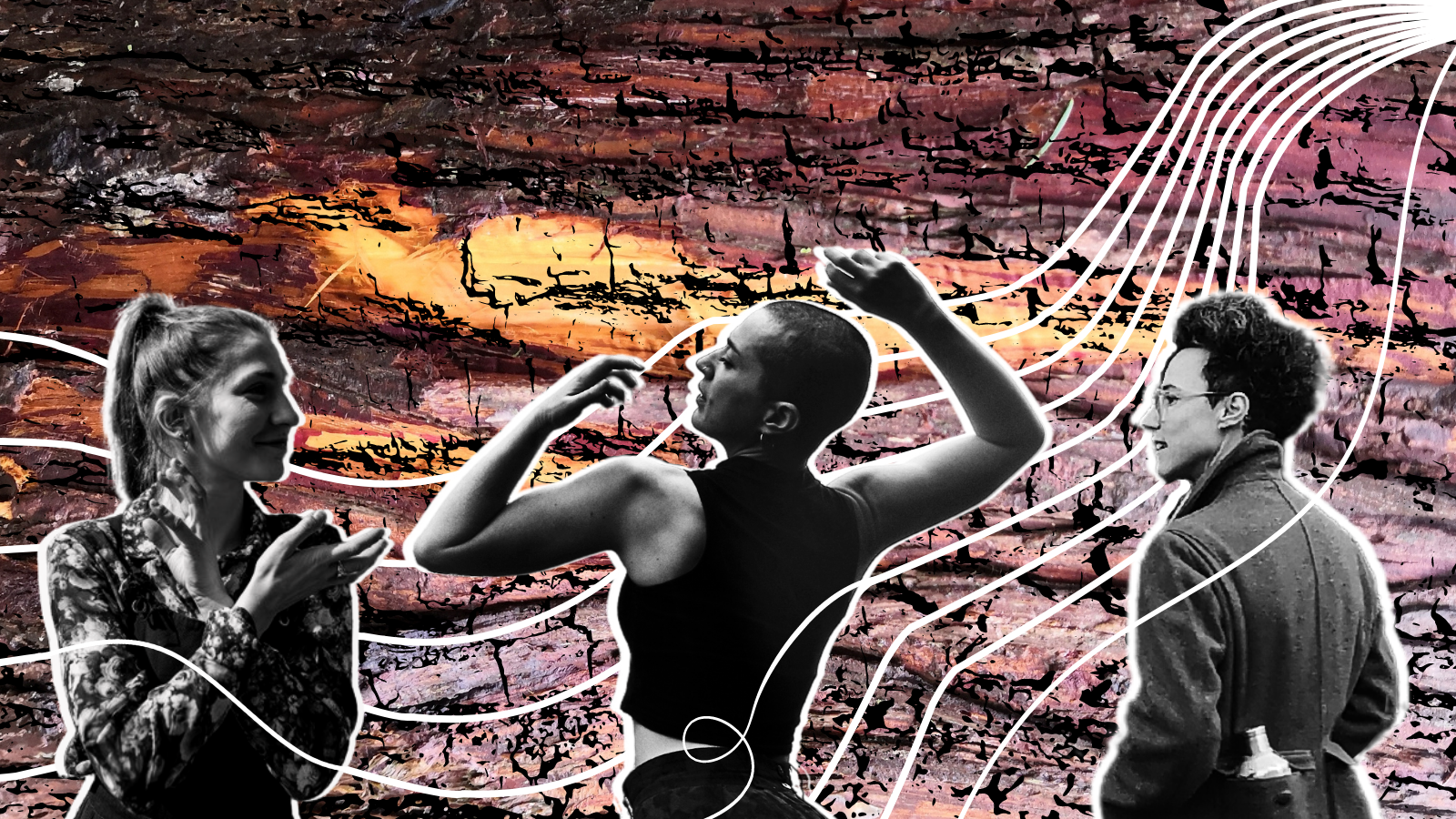
Glanio is a collective of dance artists—Marla King (she/her), Clara Rust (she/her), Fin Jordão (they/them)—in partnership with Impelo, coming together to create, reflect and challenge through movement in response to the climate and ecological emergency.
Rooted in place and community, Glanio explores our interdependent relationship with the natural world—drawing from memory, grounded in the present, and imagining just and connected futures.
We develop site-responsive performances that reimagine how dance can engage with land, neighbourhood, and social change. Our work proposes alternative models of performance and socially engaged arts practice—offering accessible and reflective spaces for audiences and participants alike.
Recent Residencies
Machynlleth Residency
📅 1st–15th April 2023
🌱 Culminated in three outdoor performances following a journey from Y Plas through the park to Canolfan Owain Glyndŵr. A wet-weather sharing was hosted indoors with performance excerpts and discussion.
Llandrindod Wells Residency
📅 15th September–1st October 2023
🌿 This residency ended with three outdoor performances guiding audiences along a nature-connected path, starting from Rock Park archway (Norton Terrace opposite The Gwalia).
Extras
As part of the Glanio project, the collective are not just interested in creating a dance performance, but hope to have a wider impact on the way that dance touring is approached. During their residency in Machynlleth, attendees were encouraged to take public transport or car share where possible when coming to see the performances or take part in the workshops.
For those who want to learn more about a slower way of life, and approaching the climate crisis in a way that is positive and focuses on the good that we can do for the environment, others and ourselves, below are recommendations of where to learn more and ideas of where you can start, by making small changes.
Book Recommendations
A non-exhaustive list of books that discuss the environmental crises we face and how to understand and approach them in ways that are positive, creative and focus on the resilience and imagination imbued in the human spirit.
'From What is to What if: Unleashing the Power of Imagination to Create the Future We Want' by Rob Hopkins
'Active Hope: How to Face the Mess We're in with Unexpected Resilience & Creative Power' by Joanna Macy & Chris Johnstone
'Life in the City of Dirty Water: A Memoir of Healing' by Clayton Thomas-Muller
'Nature is a Human Right: Why We're Fighting for Green in a Grey World' by Ellen Miles
Buy second hand books here: World of Books
Podcast Recommendations
Podcasts and podcast episodes which look constructively at the ways in which we can approach the climate crisis, with some episodes that look particularly at the impacts of the dance, theatre and performance industries’ impacts upon the environment. All links are through Spotify.
Talking Moves podcast episode on environmental impacts in dance sector with Adam Benjamin and Marla King.
Climate Crisis Conversations podcast by the Climate Psychology Alliance
From What if to What Next podcast by Rob Hopkins
Fashion and Clothing
As part of her research for Glanio, costume designer Tegan James looked into the impacts that fast fashion has on the environment and how the costumes for Glanio might be approached differently. Below are some of the findings about the impacts of fast fashion.
The world uses an estimated 80 billion pieces of clothing every year, a 400 percent increase from two decades ago. — The True Cost
Textile production contributes more to climate change than international aviation and shipping combined. — House of Commons Environmental Audit Committee, 2019
Buying just one white cotton shirt produces the same amount of emissions as driving 35 miles in a car. —WRAP
By 2030, global apparel consumption is projected to rise by 63%, from 62 million tons today to 102 million tons—equivalent to more than 500 billion additional T-shirts. — House of Commons Environmental Audit Committee, 2019
75% of consumers believe that sustainability is important and one-third are willing to choose brands that help environmental and social improvement. — Ellen MacArthur Foundation
The fashion industry is responsible for 10% of annual global carbon emissions. — Morgan McFall-Johnsen (2020)
Half a million tons of plastic microfibers are dumped into the ocean every year, the equivalent of 50 billion plastic bottles. — World Economic Forum
Around 300,000 tonnes of textile waste ends up in household black bins every year, sent to landfill or incinerators. Less than 1% of material used to produce clothing is recycled into new clothing at the end of its life. — House of Commons Environmental Audit Committee, 2019
Clothing companies create more than 1 million garments every day. — Greenpeace
Fast fashion emissions will grow by 50% by 2030, if current growth continues. — Ellen MacArthur Foundation
Extending the life of clothes by just 9 months of active use would reduce carbon, water and waste footprints by 20-30% each. — WRAP
The process of making the costumes for Glanio therefore, was one which tried to reduce the environmental impact of the clothing as much as possible. Some of the costumes were repurposed from the costumes made for the original iteration of Glanio in Llandrindod. Other garments used for the costumes were sourced from second-hand clothing apps such as Vinted, or were purchased second hand from local charity shops.
Buying clothes second-hand is one of the easiest ways to decrease the impacts of fast fashion on the environment as it prolongs the lifespan of garments and prevents them from entering landfill. Charity, thrift and vintage shops are a good place to start as they reduce other waste from packaging and shipping. However, using apps such as Vinted and Depop are good alternatives as they give a wider range of clothing options from sellers in the UK whilst still ensuring that clothing has a longer lifespan, and are often budget friendly as well!
There are also a growing number of slow-fashion brands which focus on sourcing durable and sustainable fabrics for their garments, as well as ensuring that there is as little waste as possible in the manufacturing process. If you would like to buy clothes from a slow-fashion brand here is a list of 36 Conscious Clothing Brands from the UK.